…since I’ve posted anything, so here’s the update. There’s a video up on YouTube with the last two weeks’ news. It’s actually been pretty quiet—I’ve handled a couple of small projects, and I took a trip up to New Jersey last weekend with Bennett to pick up a replacement axle for the Hudson. The Pacemaker strangely and suddenly decided to eat its own gears after driving several miles with no issues, so we picked up a used unit from a parts car as well as a bunch of chrome dash parts he can use to replace the odd wooden dash the PO installed (the original Hudson chrome is FAR superior and it makes no sense why this would have been removed).
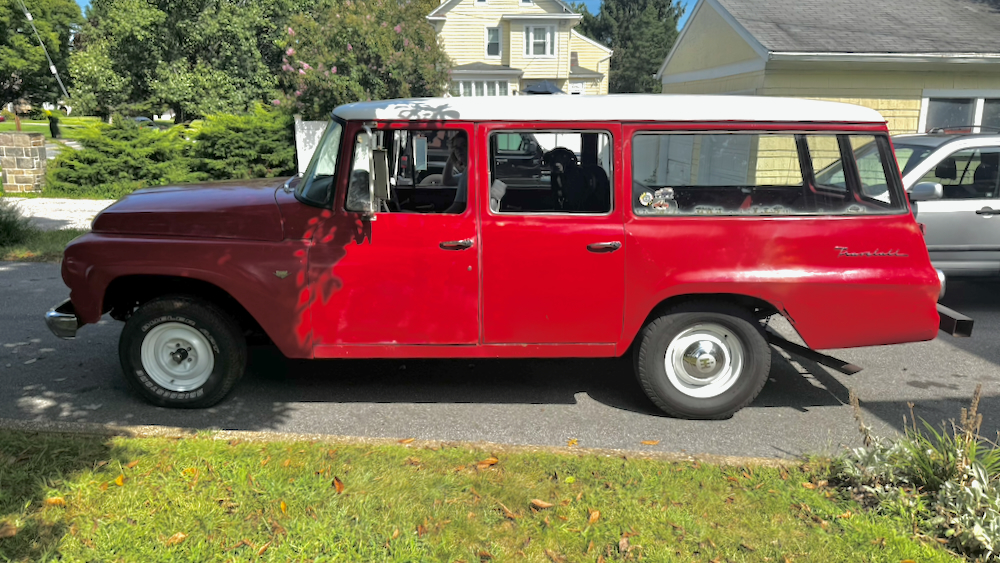
I continued futzing with my mechanical fuel pump, trying to diagnose why it wasn’t working, and put it on and took it off the truck several times to see if I could pull fuel from the boat tank—with no success. I also used some large paper to draw out a rough template of a floor patch to go in the driver’s side of the Travelall. I’ve got everything I need to complete this project except for free time, but I’d like to make a push and try to get it done before the snow flies.
I’m just below the threshold for being able to monetize the YouTube channel—I’ve got the subscribers and posting cadence but I need another 100 or so watch hours to be able to qualify. If I do a longform video with the floor repair and maybe some deeper looks at the Hudson project, maybe I can get over the hump. I did spend yesterday over at Brian’s shop helping Bennett clean and hang the new axle, and we got everything connected back up—the axle, brake lines, emergency brake cables, and driveshaft. While it was on the jack stands he started it up and we verified it was shifting into gear—even though he’s not quite sure what that pattern is. By looking at the transmission pan we identified it as a 4L60, a popular choice for hot rods, and that should help us understand the shift linkage. All of that is on video including some nice drone footage, so I think it’ll make for a good update.
Back at my workbench, I pulled my mechanical pump apart for the third time and re-assembled it carefully following the best instructions I could find online. This time I verified it’s pulling from the inlet and pushing from the outlet, so when it dries out from this rain, I’ll re-re-re install it and see if I can pull from the boat tank.
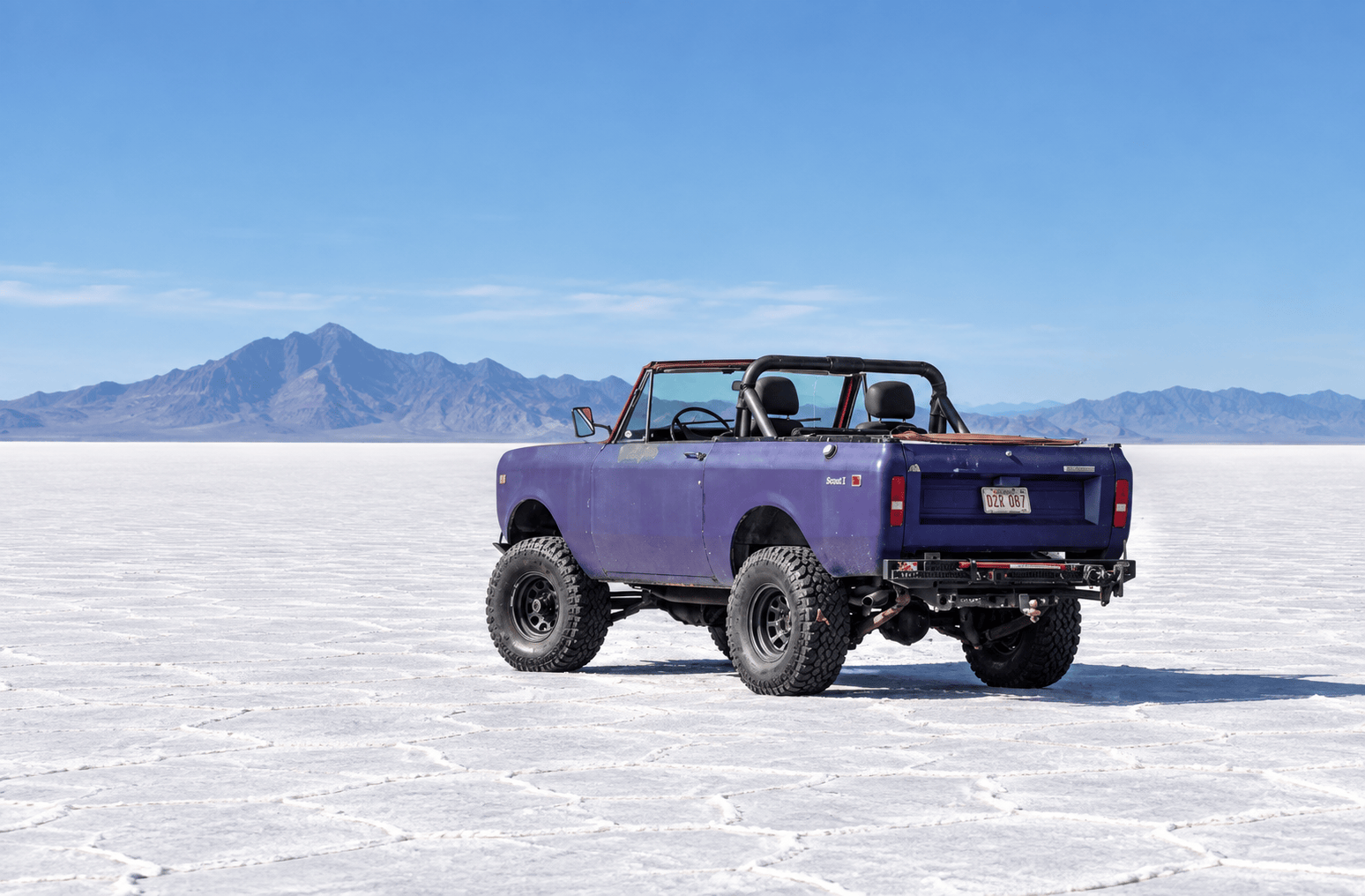
The other thing that’s moving forward on the Big List is addressing the damn gas tank in the Scout. I put 4 gallons in before driving over to Brian’s and found that it was pissing gas all over his driveway from some of the lines I installed when I redid the evap system. I’m over this. I can’t fill the tank without it spilling everywhere, I’ve never known how much gas is in it, and now it reeks. I think we’re at the point when it needs to be drained and dropped, and I’ll be going back to the metal tank, which is now up in the garage attic waiting its turn.